Pickleball is an excellent way to stay active, challenge yourself, and connect with other people. However, as participation in the sport has grown, so has the number of pickleball-related injuries.
Some injuries happen suddenly, such as an ankle sprain or fall. Others develop gradually because the amount of pickleball someone is playing exceeds their body’s current capacity to tolerate it.
As a sports physical therapist who works with recreational, competitive, and professional pickleball players, I frequently hear some version of this question:
“Do I have to stop playing pickleball?”
The answer is often no. Depending on the injury, you may be able to continue playing with temporary modifications while addressing the factors contributing to your pain.
Here are some of the most common pickleball injuries I see and what players should know about them.
1. Achilles Tendinitis and Achilles Tendinopathy
The Achilles tendon connects the calf muscles to the heel. It plays an important role in pushing off, accelerating, changing direction, and moving toward the kitchen line.
Achilles pain may develop after:
-
Increasing how many days per week you play
-
Playing longer sessions or more tournaments
-
Returning after a period of reduced activity
-
Adding singles pickleball
-
Changing shoes
-
Having limited calf/hip strength or ankle mobility
Symptoms may include pain or stiffness when first getting out of bed, tenderness along the tendon, or pain when pushing off and moving around the court.
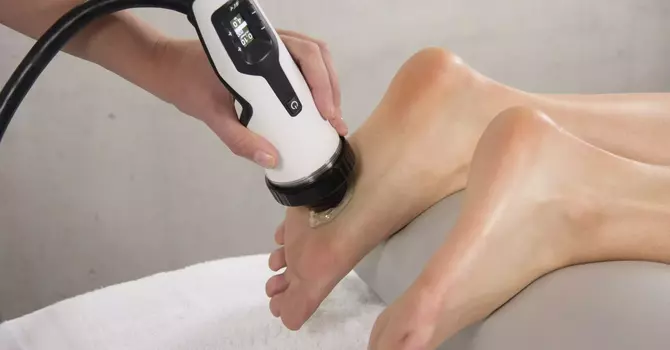
Complete rest is not always the answer. Tendons generally need appropriate, progressively increased loading to regain their strength and capacity. Treatment may include specific, progressive calf strengthening, mobility exercises, modifications to playing volume, and—in some chronic cases—focused shockwave therapy.
Read more about FOCUSED SHOCKWAVE THERAPY.
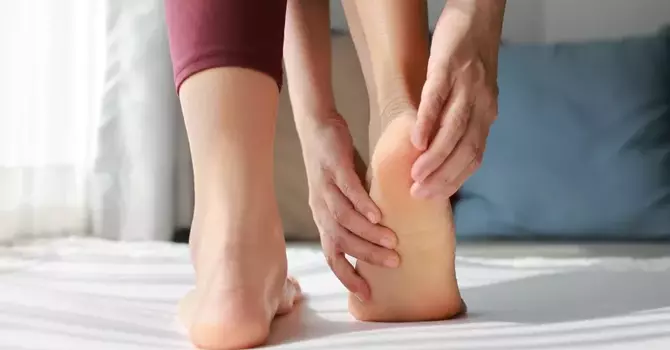
2. Plantar Fasciitis
Plantar fasciitis commonly causes pain underneath the heel. It may be most noticeable during the first few steps in the morning or after sitting for an extended period.
Pickleball can aggravate plantar heel pain because the sport involves repeated starts, stops, lunges, and changes of direction. Playing more frequently than your feet are prepared for may contribute to symptoms.
Treatment often includes evaluating ankle mobility, calf and foot strength, footwear, playing volume, and the way forces are being absorbed through the leg.
Persistent plantar fasciitis may also respond to focused shockwave therapy, particularly when symptoms have not improved with more traditional treatment.
Find out more about PLANTAR FASCIITIS TREATMENT.
3. Knee Pain
Pickleball requires players to repeatedly bend, lunge, decelerate, and change direction. These movements can expose weaknesses or limitations in the hips, knees, and ankles.
Knee pain does not necessarily mean that pickleball is damaging your joint. Even when arthritis is present on an X-ray or MRI, many people can continue playing successfully.
The goal is to determine why the knee is becoming irritated. Contributing factors may include:
-
A sudden increase in playing time
-
Reduced hip or leg strength
-
Limited ankle mobility
-
Difficulty slowing down or controlling a lunge
-
Inadequate recovery between sessions
-
Playing through increasing swelling or pain
Strength training and load management can often improve the knee’s ability to tolerate pickleball. Some players may need to temporarily decrease the length or intensity of their sessions, but that does not always mean stopping completely. Depending on the underlying cause of the knee pain, treatment may include progressive strengthening, blood flow restriction training, load management, and in certain cases, focused shockwave therapy.
Find out more about BLOOD FLOW RESTRICTION THERAPY.
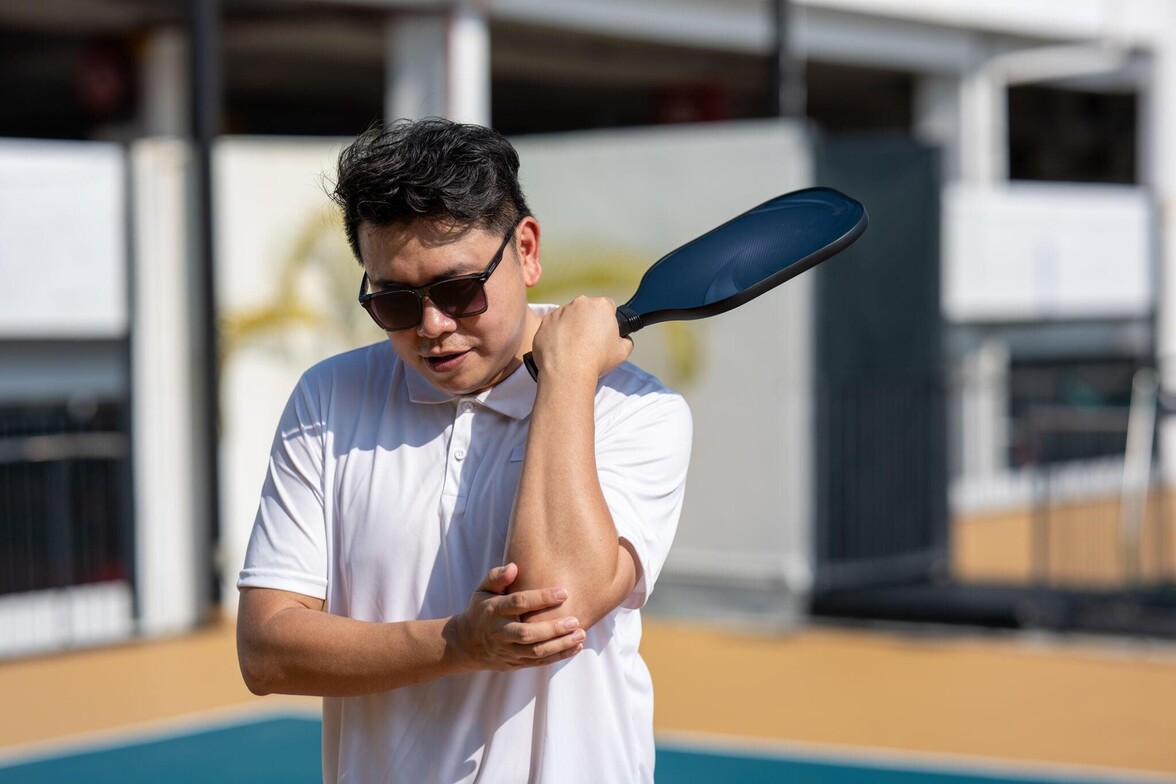
4. Pickleball Elbow
“Pickleball elbow” commonly refers to irritation of the tendons on the outside of the elbow, similar to tennis elbow.
Symptoms may include pain when gripping the paddle, hitting a backhand, lifting objects, shaking hands, or opening a jar.
Several factors may contribute:
-
Gripping the paddle too tightly
-
An incorrect grip size
-
A sudden increase in playing volume
-
Changes in paddle weight (adding lead tape or using a paddle with higher swing weight)
-
Reduced wrist, forearm, or shoulder strength
-
Repeatedly hitting the ball late or away from the body
Simply resting until the pain disappears may provide temporary relief without improving the tendon’s capacity. A progressive strengthening program for the wrist, forearm, shoulder, and upper body can help prepare the arm for the demands of the sport.
Learn more about GRIP SIZE RECOMMENDATIONS.
5. Shoulder Pain
Serving, returning overhead shots, and reaching for balls can place stress on the shoulder—particularly if a player lacks adequate shoulder mobility, strength, or control.
Shoulder pain may come from the rotator cuff, biceps tendon, joint, or surrounding muscles. It can also be influenced by how well the shoulder blade, upper back, and trunk contribute to the movement.
Treatment should not focus only on reducing pain. The entire movement pattern should be assessed, including the trunk, shoulder blade, shoulder, and arm.
6. Low-Back Pain
Pickleball involves repeated bending, rotation, reaching, and quick changes in position. Low-back pain may develop when a player repeatedly reaches for balls with limited help from the hips and legs or has difficulty tolerating rotation and rapid movement.
A physical therapy evaluation can help determine whether the pain is primarily related to mobility, strength, movement coordination, workload, or another underlying issue.
The goal is not simply to make the back feel better temporarily. It is to improve the body’s ability to tolerate the positions and forces required on the court.
Why Pickleball Injuries Occur
Many overuse injuries are not caused by one “bad” movement. They develop when the demands being placed on the body exceed its current capacity.
You may play pickleball several days per week, but playing the sport does not necessarily develop every physical quality needed to tolerate it.
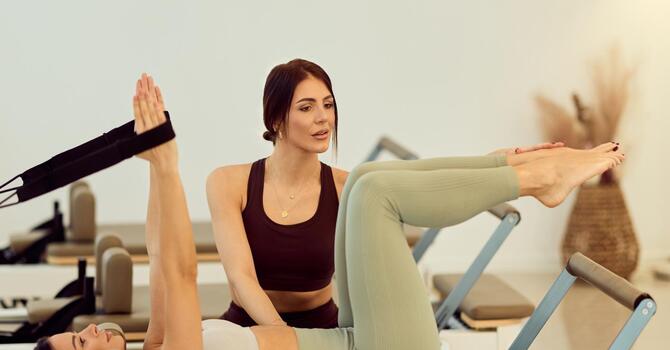
Off-court training can help improve:
-
Strength
-
Power
-
Mobility
-
Balance
-
Acceleration and deceleration
-
Rotational control
-
Endurance and recovery
This does not mean every pickleball player needs an intense gym program. An effective program should match the player’s age, injury history, current abilities, goals, and playing schedule.
Learn more about OFF-COURT TRAINING PROGRAM.
Do You Need to Stop Playing?
Not every injury requires complete rest from pickleball. In many situations, it is possible to modify how often, how long, or how intensely you play while beginning rehabilitation.
You may temporarily need to:
-
Play fewer days per week
-
Shorten your sessions
-
Avoid playing multiple long sessions on consecutive days
-
Choose doubles instead of singles
-
Reduce tournament volume
-
Complete a proper warm-up
-
Add strength and recovery days
However, worsening pain, significant swelling, inability to bear weight, sudden weakness, numbness, or pain that is not improving should be evaluated.
Physical Therapy for Pickleball Injuries in Mendota Heights
At Superior Physical Therapy, treatment is based on more than the location of your pain. We look at your strength, mobility, movement patterns, playing schedule, recovery, and the specific demands you experience on the pickleball court.
The goal is not merely to get you out of pain. It is to help you build the capacity to keep playing and doing the activities you enjoy.
Superior Physical Therapy is located inside The Heights Racquet & Social Club in Mendota Heights, Minnesota. If pain is affecting your ability to play pickleball—or you want an off-court program designed to improve your performance and reduce your injury risk—you can schedule an evaluation or training session.

Keely Behning
Contact Me