What if getting stronger wasn’t about doing more—but about doing things better?
Pilates is built on that idea. Rather than focusing on intensity or pushing through fatigue, Pilates emphasizes precision, control, and awareness. It’s a method of movement that trains your body to work efficiently—developing strength, stability, and coordination in a way that carries over into everything you do.
What is Pilates?
Pilates is a form of exercise centered around controlled, intentional movement. It focuses on core strength, alignment, breathing, and muscle coordination.
Instead of rushing through repetitions, Pilates asks you to slow down and pay attention to how your body is moving. This approach helps improve:
-
Strength and stability
-
Flexibility and mobility
-
Posture and alignment
-
Overall body awareness
The goal isn’t just to complete an exercise—it’s to perform it well.
What is a Pilates Reformer?
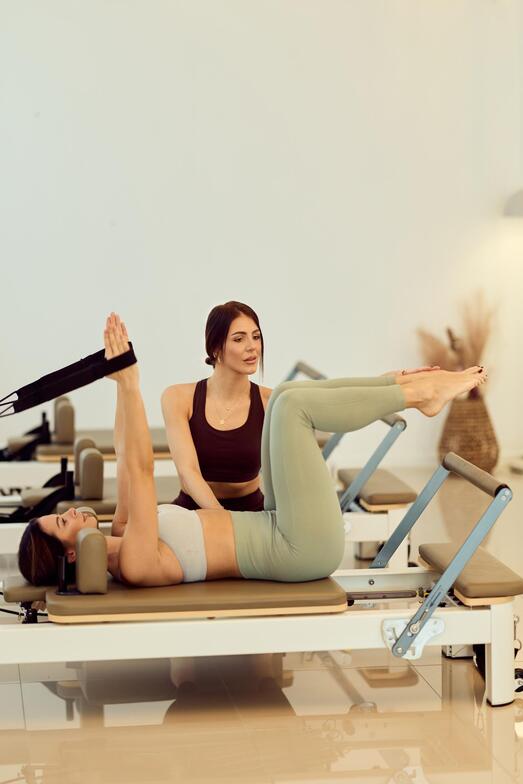
The Pilates reformer is a specialized piece of equipment that uses springs, pulleys, and a moving carriage to provide both resistance and support.
It allows for a wide range of exercises that can be adjusted to meet you exactly where you are. Whether you’re recovering from an injury or looking to build strength, the reformer creates an environment where movement can be both challenging and controlled.
What makes it unique is that it:
-
Supports proper alignment while you move
-
Provides feedback to improve control
-
Allows for both strengthening and mobility work
Why Pilates Works So Well in Physical Therapy
One of the most common things we see in physical therapy is compensation.
When something is weak, stiff, or painful, your body adapts. It finds a way to keep moving by relying on stronger or more familiar muscles. While that can help in the short term, it often leads to inefficient movement patterns—and sometimes more pain over time.
Pilates is especially effective at addressing this because it slows movement down and emphasizes control. It brings awareness to how you’re moving, making compensations easier to identify and correct.
The Physical Therapist Advantage
This is where physical therapists bring a different level of expertise.
As movement specialists, we’re trained to notice subtle compensations that are easy to miss. Many people naturally rely on their “favorite” or strongest muscles, while weaker or less active muscles don’t contribute as they should.
Over time, this imbalance can limit progress and increase the risk of injury.
By incorporating Pilates into care, physical therapists can:
-
Identify and correct faulty movement patterns
-
Cue the right muscles at the right time
-
Modify exercises to fit each individual
It’s not just about doing the exercise—it’s about doing it in a way that truly benefits your body.
Pilates as Both Rehab and Fitness
One of the most valuable aspects of Pilates is that it works across a spectrum—from rehabilitation to performance and fitness.
For those recovering from injury, it provides a controlled way to rebuild strength and improve movement quality.
For those looking for a workout, it offers a low-impact, full-body approach that builds strength, stability, and awareness.
Bringing Pilates to Superior Physical Therapy
At Superior Physical Therapy, we are now incorporating the Pilates reformer into both our physical therapy sessions and fitness offerings.
This allows us to better support our clients in:
-
Recovering from injury
-
Improving movement patterns
-
Building strength in a more intentional way
We will also be offering Pilates reformer-only classes in the future for those interested in using it as a standalone fitness option.
If you’ve ever felt like your body isn’t moving quite the way it should, Pilates offers a different approach—one that focuses on how you move, not just how much you do.

Keely Behning
Contact Me